
Why Most Wi-Fi “Upgrades” Don’t Actually Improve Wi-Fi
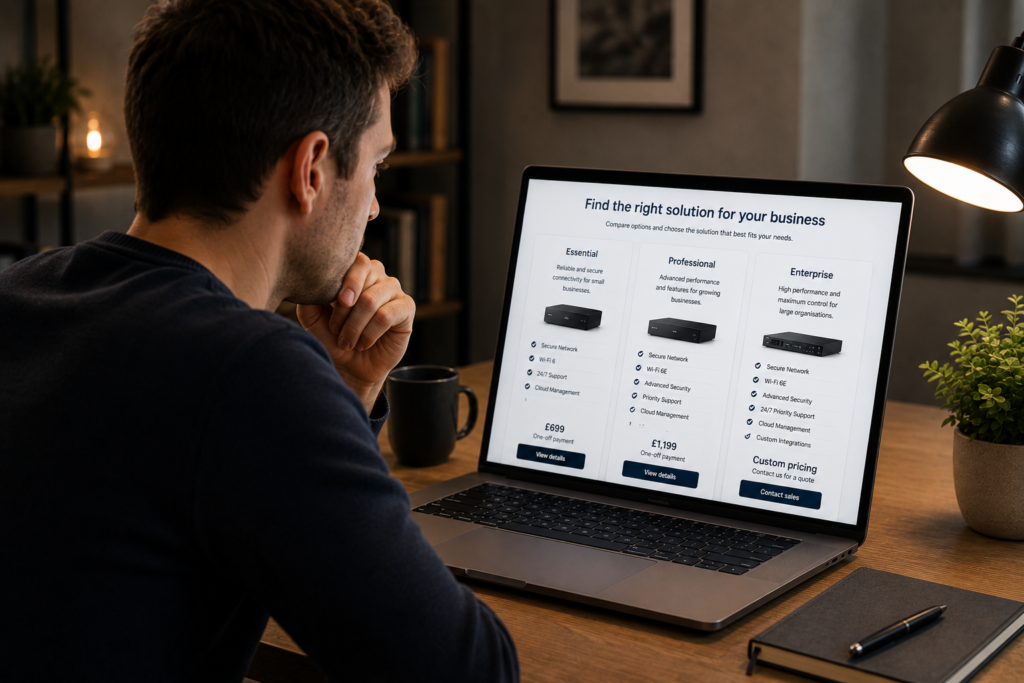
The WiFi Upgrade Story
Walk into almost any hotel, office, or public venue after a “Wi-Fi refresh” and you’ll hear the same story:
“We replaced all the access points.”
“We upgraded to the latest Wi-Fi standard.”
“We invested heavily in new hardware.”
And yet guests still complain about dropped calls, slow speeds, buffering, Teams instability, or inconsistent roaming.
Why?
Because in many environments, the hardware was never the real problem.
The uncomfortable truth in enterprise wireless is this: swapping access points without fixing the RF design is like putting a new engine into a car with flat tyres and broken steering geometry. It may look modern, but the experience barely changes.
As the industry races toward Wi-Fi 6E and Wi-Fi 7, many organisations are spending significant money on “upgrades” that leave the core design flaws completely untouched.
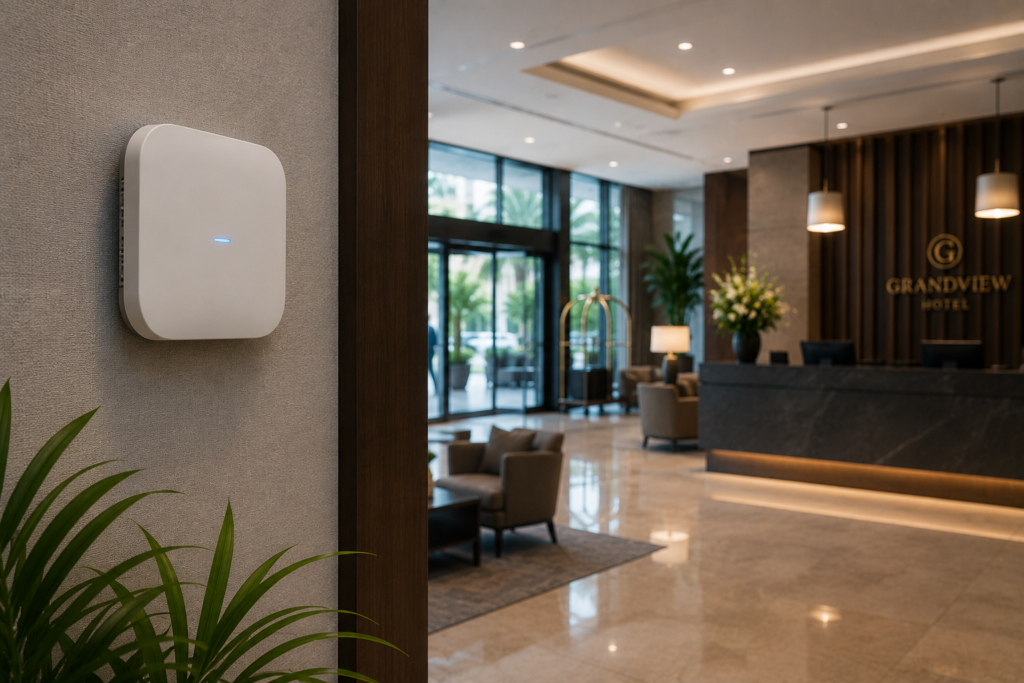
The Industry's Obsession With Hardware
The Wi-Fi market loves a hardware refresh cycle.
Every few years we see a new standard promising:
- Higher throughput
- Lower latency
- Better spectral efficiency
- More simultaneous clients
- Smarter radio management
On paper, these advancements are real. Wi-Fi 6 introduced OFDMA and better client scheduling. Wi-Fi 6E unlocked 6 GHz spectrum. Wi-Fi 7 introduces Multi-Link Operation (MLO), wider channels, and extremely high PHY rates.
But there’s a major caveat:
Modern Wi-Fi standards only deliver their benefits under the right RF conditions.
And most deployments don’t have those conditions.
The Problem Isn’t the AP
In countless hospitality and enterprise environments, the same issues appear repeatedly:
- Access points mounted too high
- Poor cell sizing
- Excessive channel overlap
- High co-channel interference (CCI)
- Bad roaming behaviour
- Incorrect transmit power levels
- Overloaded channels
- Poor client distribution
- Legacy configuration carried over for years
When these problems exist, replacing hardware alone rarely transforms the user experience.
A Wi-Fi 7 AP mounted 8 metres above a hotel ballroom floor with poor antenna placement and excessive contention will still behave like a badly designed network.
Yes, a high-end client may briefly negotiate an impressive PHY rate. But real-world throughput, airtime efficiency, latency, and roaming stability often collapse back to levels barely distinguishable from much older deployments.
The result?
A very expensive refresh with very little measurable operational improvement.
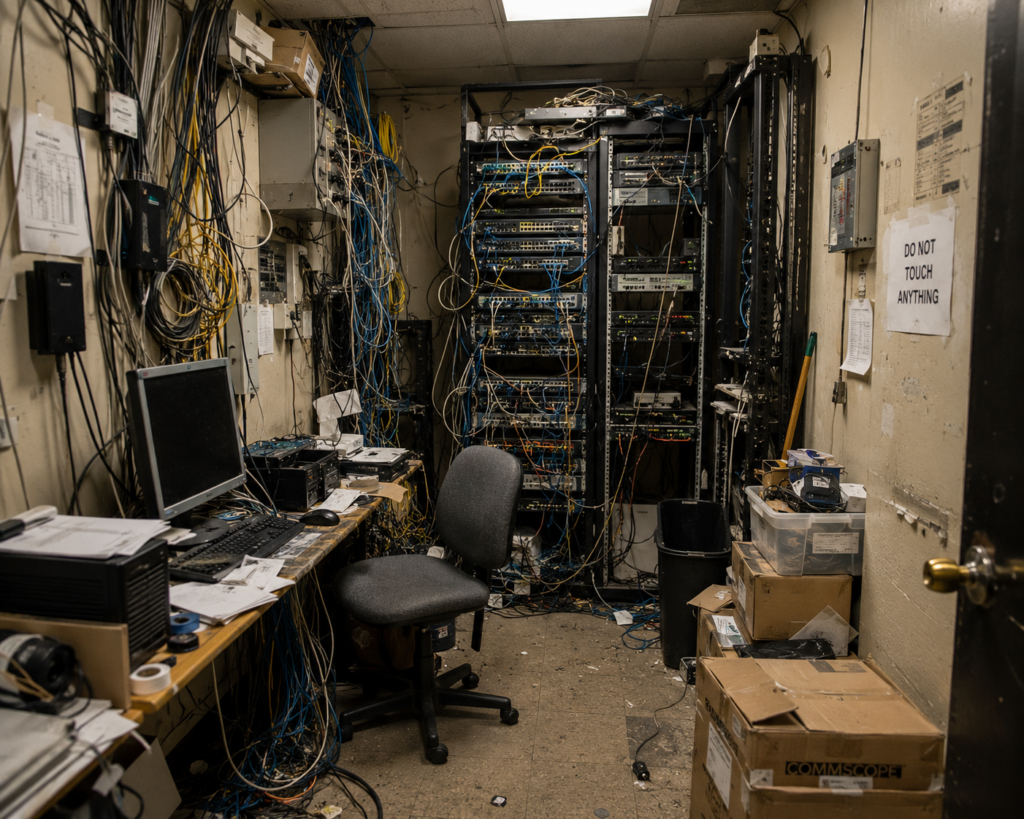
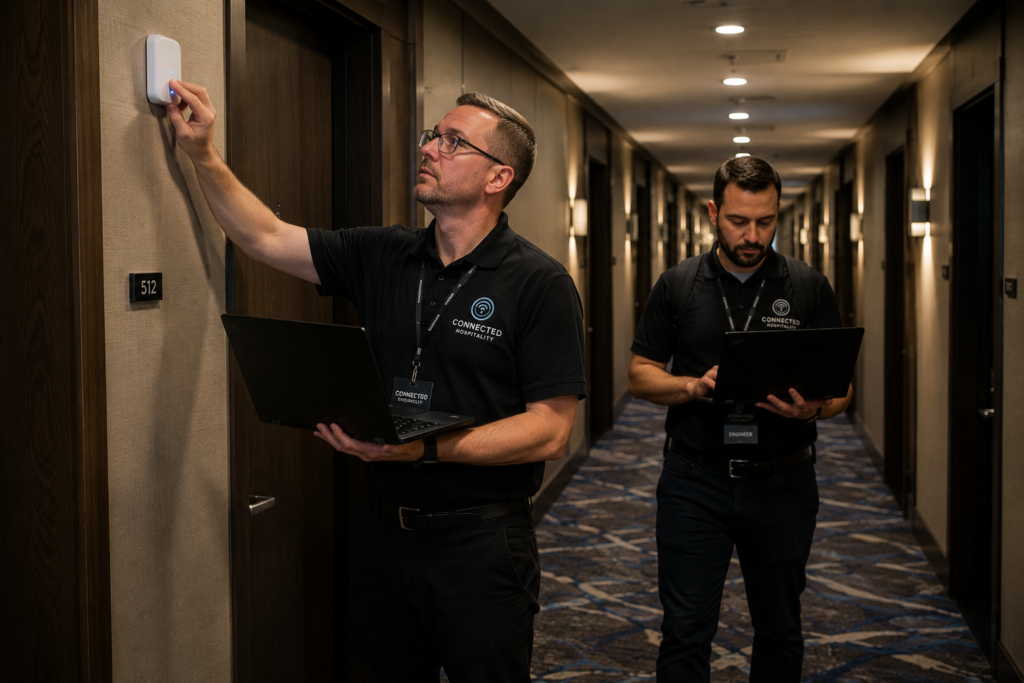
Higher Standards Demand Better Design
One of the biggest misconceptions in wireless networking is that newer standards automatically improve coverage.
In reality, higher-performance Wi-Fi often requires better signal quality, not just signal strength.
To achieve the headline speeds marketed with Wi-Fi 6E or Wi-Fi 7, clients need:
- Higher Signal to Noise Ratio (SNR)
- Cleaner RF conditions
- Lower interference
- Better channel planning
- More careful power balancing
This becomes especially important in high-density environments such as:
- Hotels
- Confernece Spaces
- Stadiums
- Student Accommodation
- Airports
If the RF environment is noisy or poorly designed, clients quickly step down modulation rates. The theoretical performance advantage disappears almost immediately.
This is why many venues still running well-designed Wi-Fi 5 or even Wi-Fi 4 deployments can outperform poorly designed “next-generation” networks.
Good RF design beats marketing specifications every time.

The Hidden Cost of “Lift-and-Shift” Upgrades
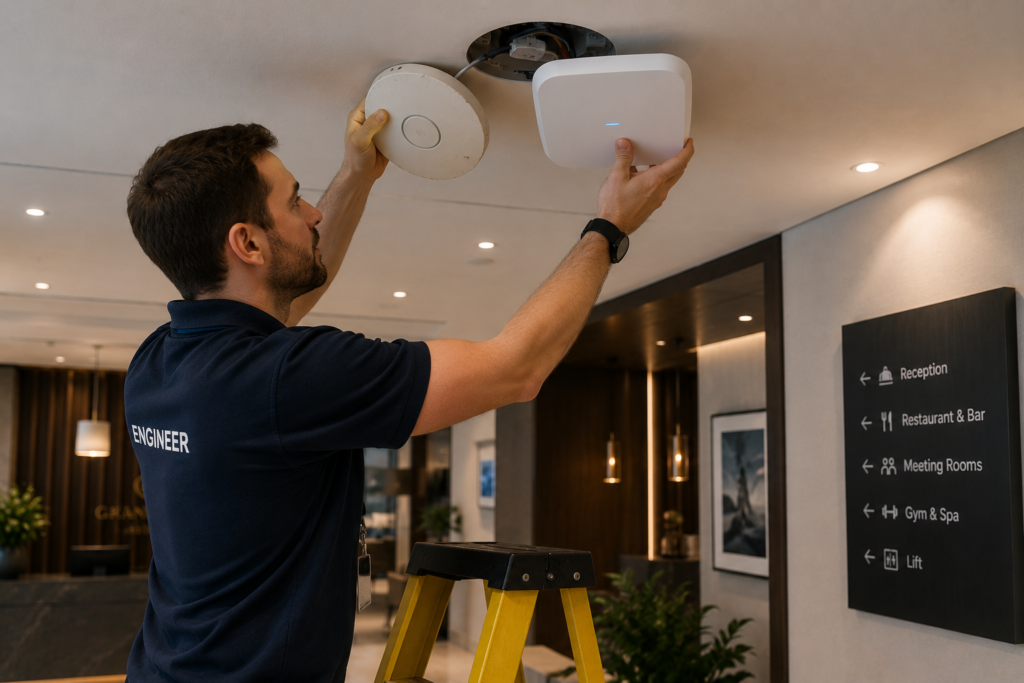
One of the most common mistakes in the industry is the “lift-and-shift” refresh:
- Remove old APs
- Install new APs in the exact same locations
- Keep the same mounting heights
- Reuse the same cabling layouts
- Retain legacy configurations
- Hope the latest hardware fixes everything
This approach is attractive because it is fast and operationally simple.
But it ignores the reality that wireless behaviour is heavily influenced by physical design and RF engineering.
A bad AP location remains bad regardless of how advanced the AP becomes.
In fact, newer hardware can sometimes expose design flaws even more aggressively because modern standards behave differently under contention and interference.
Organisations often expect transformative results from the latest generation of wireless technology, only to discover that user complaints remain largely unchanged.
6 GHz: The Real Opportunity — If You Design for It
One genuinely significant advancement in modern Wi-Fi is access to the 6 GHz spectrum.
This is where Wi-Fi 6E and Wi-Fi 7 can provide meaningful improvements:
- Cleaner Spectrum
- Less Interference
- More Available Channels
- Reduced Congestion
- Better Performance In Dense Environments
But there’s another catch.
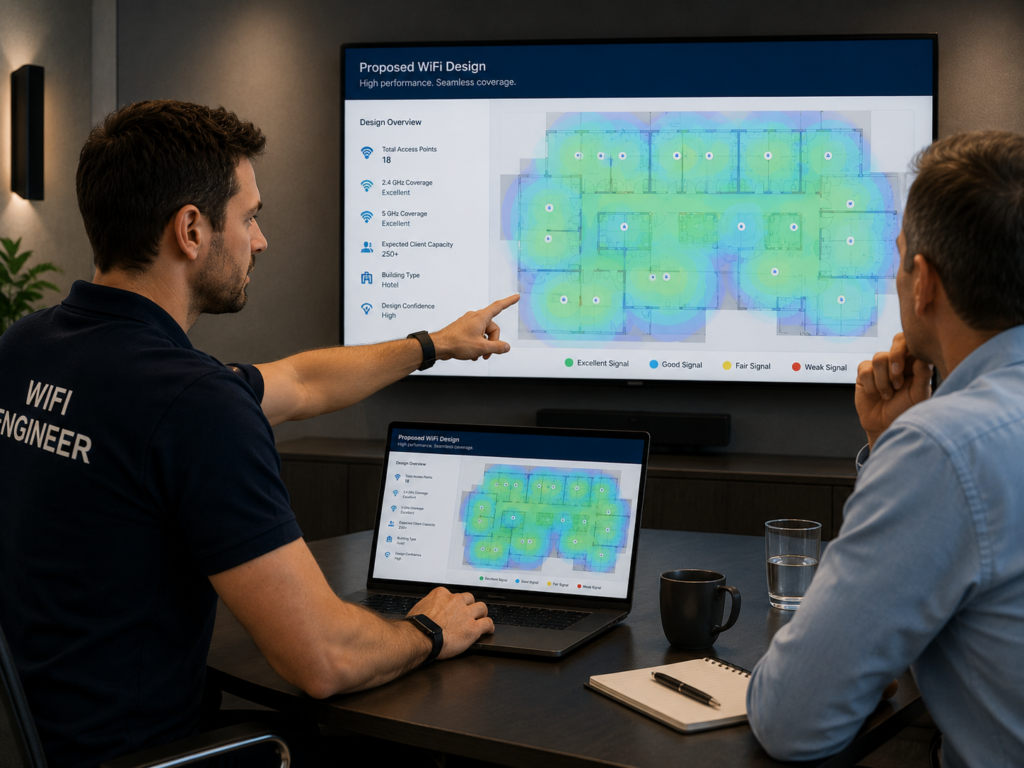
To fully benefit from 6 GHz, networks typically require:
- WPA3 adoption
- Updated client support
- Revised RF planning
- New channel strategies
- Reconsidered AP placement
- Better coverage density
In other words, the upgrade still requires proper design work.
Simply installing 6 GHz-capable APs without redesigning the network often results in minimal real-world gains because many clients continue operating primarily on 5 GHz or 2.4 GHz.
The organisations seeing the biggest benefits from Wi-Fi 6E and Wi-Fi 7 are not just buying new hardware.
They are redesigning networks properly.
The Role of RF Engineering
This is where experienced wireless engineering becomes critical.
A successful wireless deployment should involve:
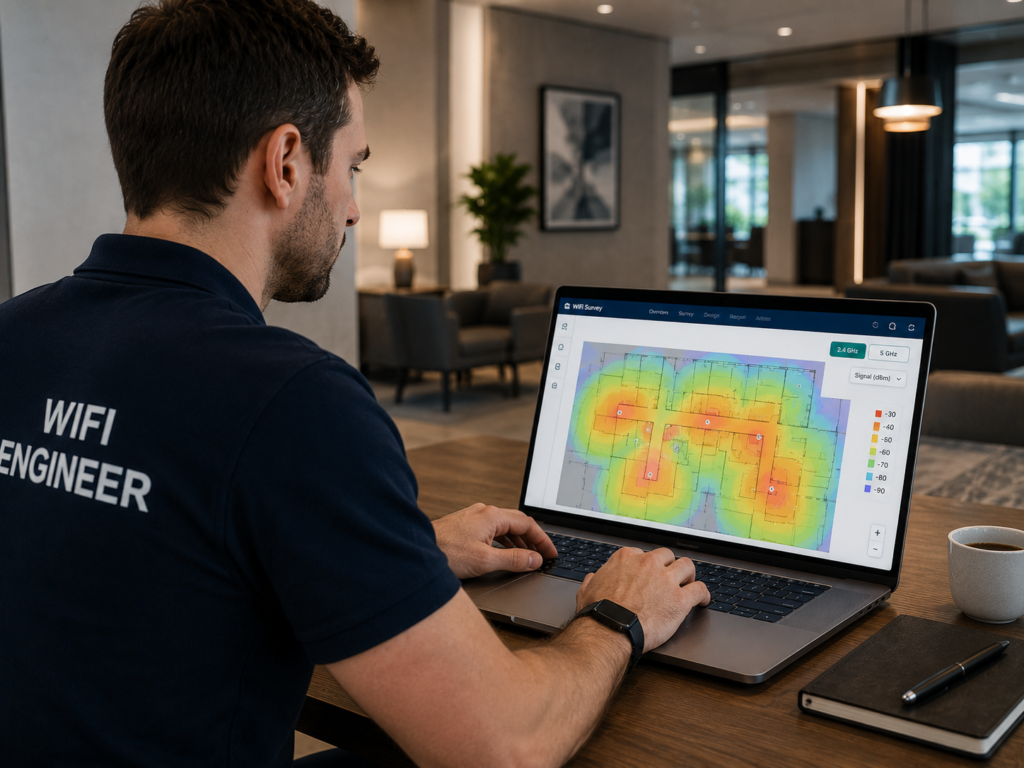
- Predictive design
- Proper site surveys
- Validation surveys
- Channel planning
- Capacity analysis
- Client density modelling
- Roaming optimisation
- Power tuning
- Interference analysis
Yet these steps are often reduced or removed entirely during refresh projects in order to save time or reduce upfront cost.
Ironically, this usually leads to higher long-term operational costs:
- More support tickets
- More guest complaints
- More troubleshooting
- More engineer callouts
- Reduced user satisfaction
- Earlier refresh cycles
The cheapest part of most wireless projects is the design work.
And it is often the most valuable.

Why User Experience Matters More Than PHY Rates
End users do not care about:
- Maximum modulation rates
- Theoretical throughput
- Wi-Fi generation numbers
- Vendor marketing terminology
They care about:
- Stable video calls
- Fast roaming
- Reliable streaming
- Consistent performance
- Low latency
- Simple connectivity
A carefully engineered Wi-Fi 5 deployment delivering stable, predictable performance will almost always create a better user experience than a poorly designed Wi-Fi 7 network chasing benchmark speeds.
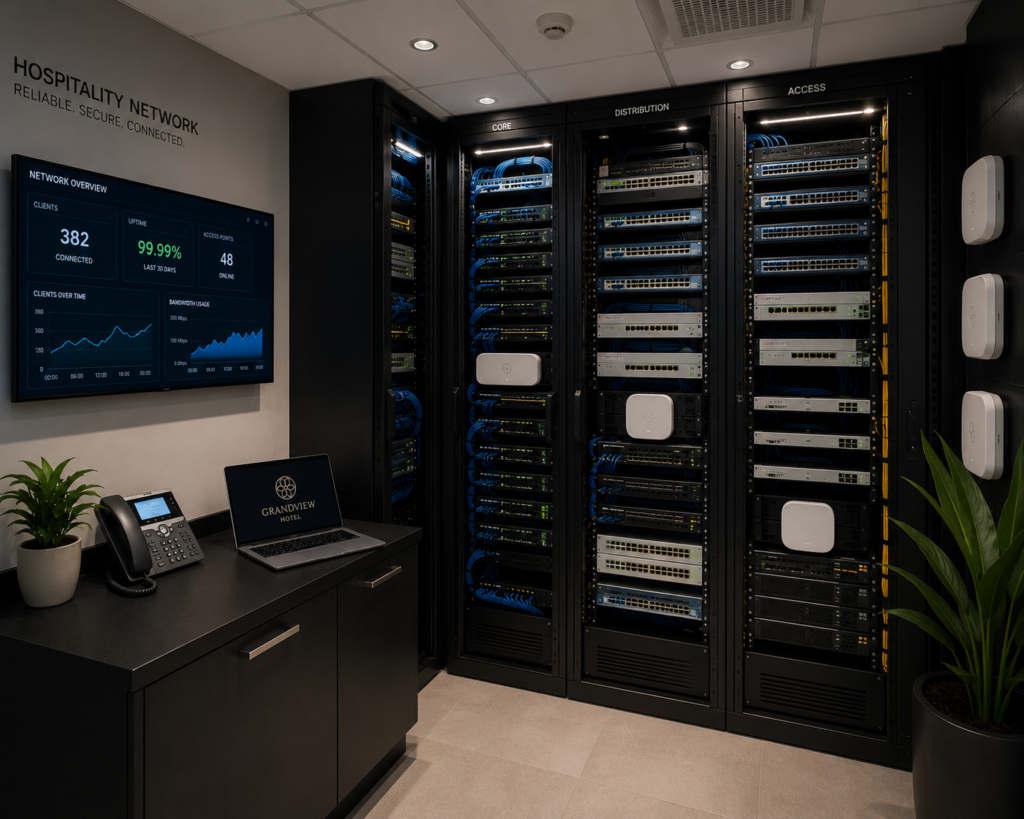
Wireless networking is ultimately about airtime management, RF efficiency, and user experience — not marketing labels.
The Future of Wi-Fi Design
As wireless standards continue evolving, design quality will matter even more.
The industry is entering an era where:
- Client density keeps increasing
- IoT devices continue multiplying
- Real-time applications dominate traffic
- Spectrum becomes more valuable
- User expectations rise dramatically
The days of “just add more APs” are over.
Modern wireless success requires intelligent RF engineering, capacity-led thinking, and continuous optimisation.
The organisations that understand this will achieve dramatically better performance and longer infrastructure lifecycles.
The ones that continue treating Wi-Fi as a hardware replacement exercise will keep spending money without materially improving outcomes.

Final Thoughts
The next time someone proposes a wireless upgrade, the first question should not be:
“What APs are we buying?”
It should be:
“What problem are we actually trying to solve?”
Because if the design remains flawed, the latest hardware generation may change the specification sheet — but not the experience.
And in wireless networking, experience is the only metric users actually remember.