Why the Hospitality Sector is a Prime Cyber Target
The UK hospitality industry handles an immense volume of valuable personal and financial data on a daily basis: guest payment cards, passport numbers, home addresses, corporate booking details, and real-time occupancy records. Combined with high staff turnover, decentralized operations, and open guest Wi-Fi networks, hotels and restaurants represent an exceptionally attractive target for cyber criminals.
Understanding the most prevalent attack vectors is the first step toward implementing an effective defense-in-depth cybersecurity posture.
The Cost of a Breach
Beyond catastrophic reputational damage, the UK Information Commissioner’s Office (ICO) enforces stringent GDPR fines for preventable data breaches, alongside strict merchant penalties from payment card cardholder protection schemes (PCI-DSS).
The Top 5 Threats Hoteliers Must Defend Against
- Targeted Phishing & Social Engineering: Cybercriminals send deceptive emails mimicking corporate booking platforms (such as Booking.com or Expedia) or corporate event organizers, tricking front-desk staff into opening malicious attachments or surrendering PMS administrative credentials.
- Ransomware & Operational Extortion: Malicious actors infiltrate vulnerable remote access ports, encrypt reservation systems and key-card issuing software, and demand substantial ransoms to restore hotel operations.
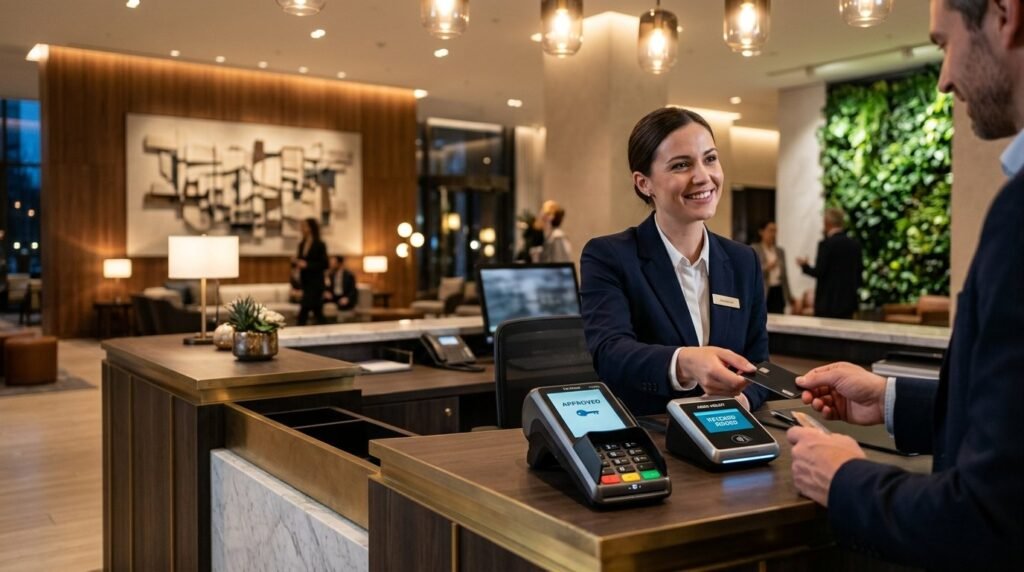
- Payment Card Interception & Skimming: Insecure network connections between payment terminals and merchant processors can allow memory-scraping malware to harvest cardholder details in real time.
- Rogue Wi-Fi & ‘Evil Twin’ Attacks: Attackers deploy unauthorized wireless access points in hotel lobbies using the property’s branding to intercept unencrypted guest credentials and session cookies.
- Compromised IoT & Smart Building Systems: Smart guest room TVs, connected thermostats, and IP surveillance cameras with default factory passwords frequently serve as entry points for attackers to pivot into core networks.
Essential Countermeasures
- Enforce Multi-Factor Authentication (MFA) across all staff emails, PMS platforms, and remote management portals.
- Implement automated guest Wi-Fi client isolation preventing peer-to-peer device communication.
- Maintain immutable, offline cloud backups of all reservation databases and core hotel configurations.
- Engage in regular third-party vulnerability assessments and penetration testing.