
Building Infrastructure That Outlasts Technology Trends
One of the costliest errors in hospitality property development is designing a network solely to meet today’s immediate device count. With the proliferation of IoT environmental controls, mobile digital key locks, staff panic buttons, robotic vacuum cleaners, and high-definition casting screens, the number of networked endpoints in hospitality doubles every few years.
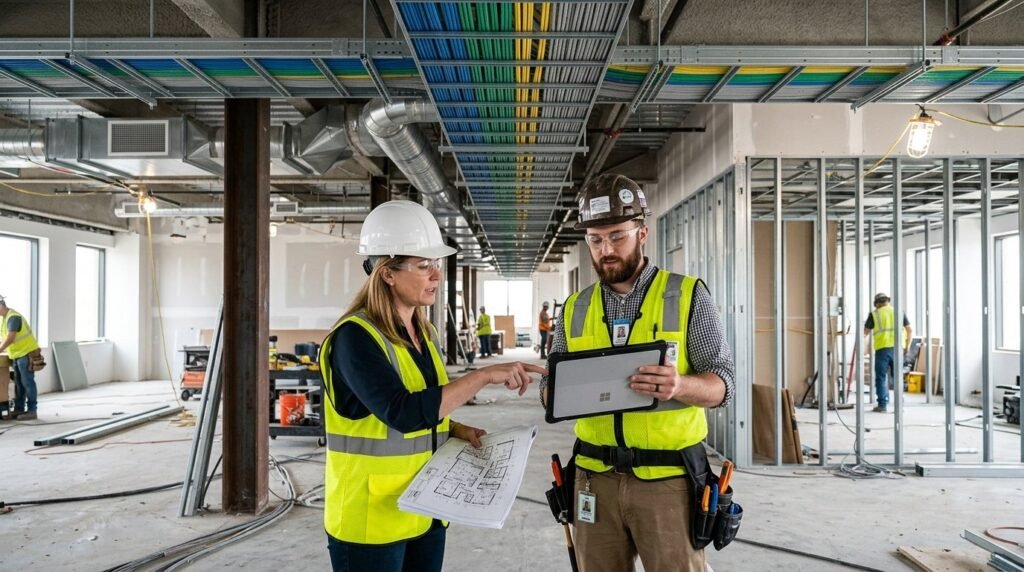
Re-opening ceilings and tearing down finished walls to run extra cables after a hotel is operational disrupts guests, causes room out-of-order losses, and costs up to 500% more than installing extra capacity during the initial fit-out stage.
The 25% Spare Capacity Golden Rule
Always specify a minimum of 25% to 30% unpopulated spare capacity across structured cable containment (trays and conduits), patch panels, and comms cabinet rack space. This guarantees that future technology expansions can be completed swiftly and cleanly.
Strategic Planning Pillars for Resilient Growth
- Dual Data Outlets to Every Key Point: Always pull twin cable drops to critical locations (reception desks, bar positions, ceiling AP points). The incremental cable cost during construction is negligible, yet having an instant spare line saves thousands if a link suffers damage.
- Containment Sizing & Pathway Separation: Ensure cable baskets and conduits are filled to no more than 40-50% capacity initially to prevent pinching and allow smooth future cable pulls. Strictly maintain physical separation from high-voltage AC electrical lines to avoid electromagnetic interference.
- Fibre Backbone Risers: Link all floor distribution cabinets back to the central server room using multi-strand OM4 or Single-Mode optical fibre capable of seamless 40Gbps and 100Gbps upgrades.
- Standardized Documentation & Labelling: Every outlet, patch panel port, and cable run must adhere to ISO/IEC 14763 labelling standards and be fully Fluke-tested with digital certification reports retained.