Insights

Blog

Common Cyber Threats Facing Hospitality Businesses

Why the Hospitality Sector is a Prime Cyber Target The UK hospitality industry handles an immense volume of valuable personal and financial data on a daily basis: guest payment cards, passport numbers, home addresses, corporate booking details, and real-time occupancy records. Combined with high staff turnover, decentralized operations, and open guest Wi-Fi networks, hotels and restaurants represent an exceptionally attractive target for cyber criminals. Understanding the most prevalent attack vectors is the first step toward implementing an effective defense-in-depth cybersecurity posture. The Cost of a Breach Beyond catastrophic reputational damage, the UK Information Commissioner’s Office (ICO) enforces stringent GDPR fines
Read More
Blog

Why Small Businesses Need Enterprise Security

Overcoming the ‘We Are Too Small to Target’ Fallacy A widespread and hazardous misconception among independent hotel operators, boutique venues, and gastro-pub groups is that cybercriminals only target global conglomerates like Marriott or Hilton. In reality, automated attack tools, vulnerability scanners, and botnets do not discriminate based on annual turnover. In fact, industry research reveals that over 43% of all cyberattacks target small-to-medium businesses. Cybercriminals recognize that smaller operators often operate with minimal internal IT resources, making them significantly easier to compromise. Enterprise Protection is Now Within Reach Thanks to cloud-managed security platforms and scalable subscription models, independent venues can

Read More
Blog

Cat6 vs Cat6A: Which Should You Choose?

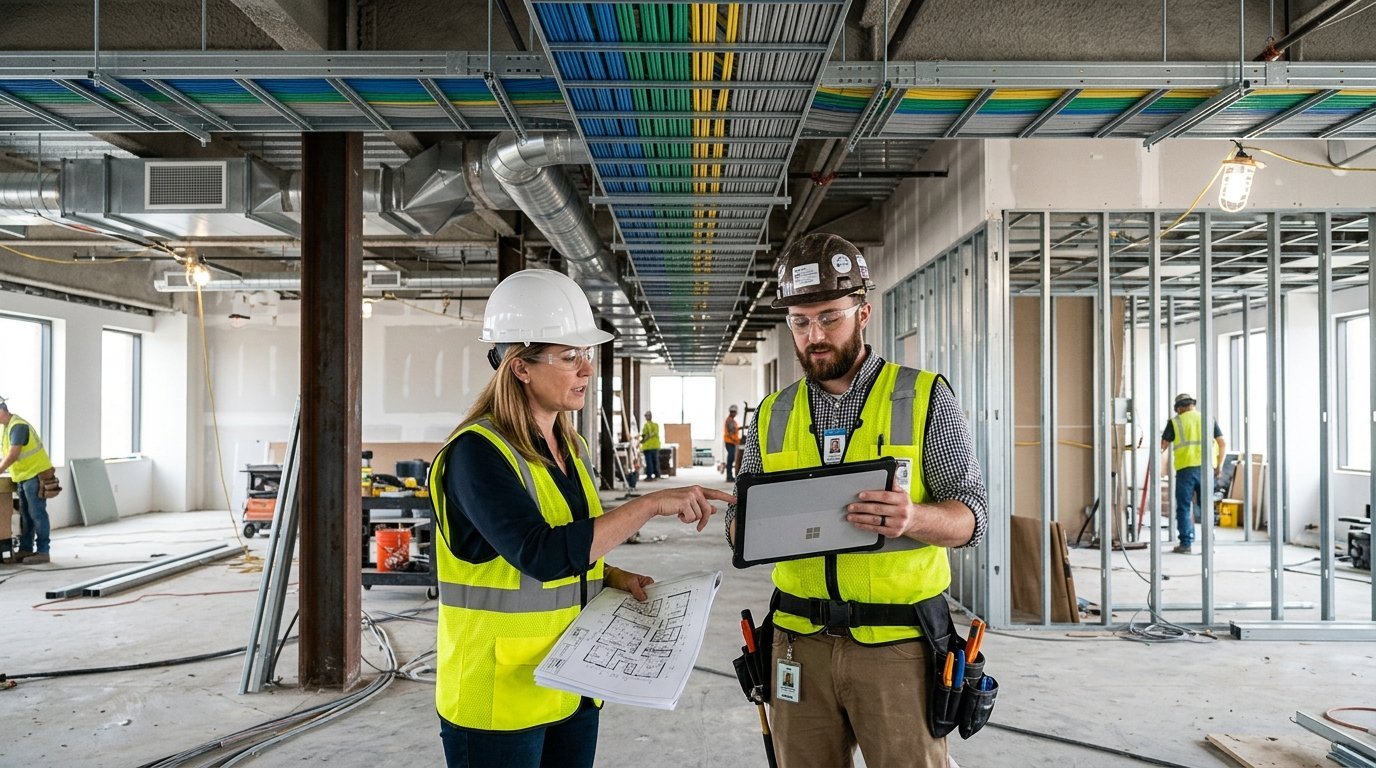
Making the Right Structured Cabling Investment Structured cabling is the absolute physical foundation of your property’s technology infrastructure. While wireless standards change every 3–4 years and switch hardware is refreshed every 5–7 years, structured copper cabling is expected to remain in ceilings, wall cavities, and risers for 15 to 20 years. When planning a hotel refurbishment or new venue fit-out, one of the most pivotal technical decisions is choosing between Category 6 (Cat6) and Category 6A (Cat6A). Understanding the physical and performance distinctions ensures you don’t compromise future capabilities to save minor upfront costs. The 10-Gigabit Distance Rule Both Cat6

Read More
Blog

Planning Network Infrastructure for Future Growth

Building Infrastructure That Outlasts Technology Trends One of the costliest errors in hospitality property development is designing a network solely to meet today’s immediate device count. With the proliferation of IoT environmental controls, mobile digital key locks, staff panic buttons, robotic vacuum cleaners, and high-definition casting screens, the number of networked endpoints in hospitality doubles every few years. Re-opening ceilings and tearing down finished walls to run extra cables after a hotel is operational disrupts guests, causes room out-of-order losses, and costs up to 500% more than installing extra capacity during the initial fit-out stage. The 25% Spare Capacity Golden

Read More
Insights

Why Hospitality DHCP Design Matters

Why Hospitality DHCP Design Matters One of the Most Overlooked Causes of Hotel WiFi Problems When hotel WiFi keeps disconnecting, most people blame the WiFi itself. They assume: the access points are outdated the broadband connection is too slow the vendor hardware is failing the guest devices are the problem But in many hospitality environments, the real issue sits deeper inside the network. One of the most overlooked causes of guest connectivity problems in hotels, serviced apartments, student accommodation and shared living environments is poor DHCP design. Request A WiFi Design Consultation Connected Hospitality regularly encounters environments where: The WiFi

Read More
Insights

Hotel WiFi Keeps Disconnecting? Find the Real Cause

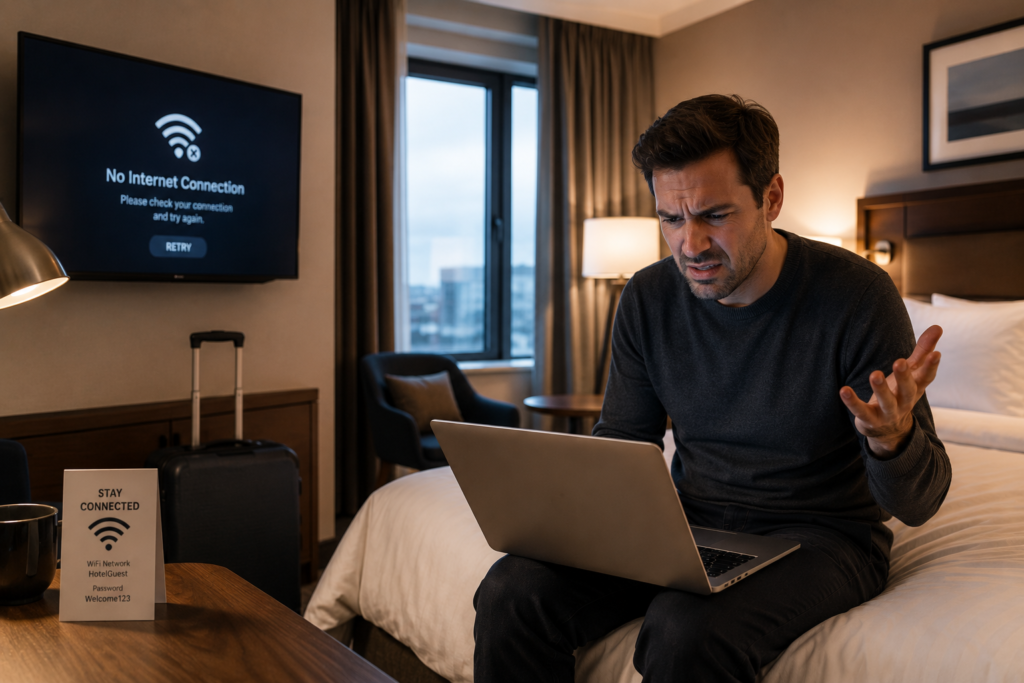
Hotel WiFi Keeps Disconnecting? Find the Real Cause Hotel WiFi Keeps Disconnecting? | Guest WiFi Troubleshooting Hotel WiFi problems are often caused by poor network design, roaming, DHCP, cabling, bandwidth or infrastructure issues.  When hotel WiFi keeps disconnecting, guests usually blame the WiFi. But in many hotels, the access points are only one part of the problem. Dropouts, slow speeds, roaming issues, login problems and “connected but no internet” messages are often caused by deeper infrastructure issues such as poor wireless design, DHCP exhaustion, overloaded switches, weak cabling, poor VLAN segmentation, insufficient bandwidth or legacy network equipment. Connected Hospitality helps

Read More
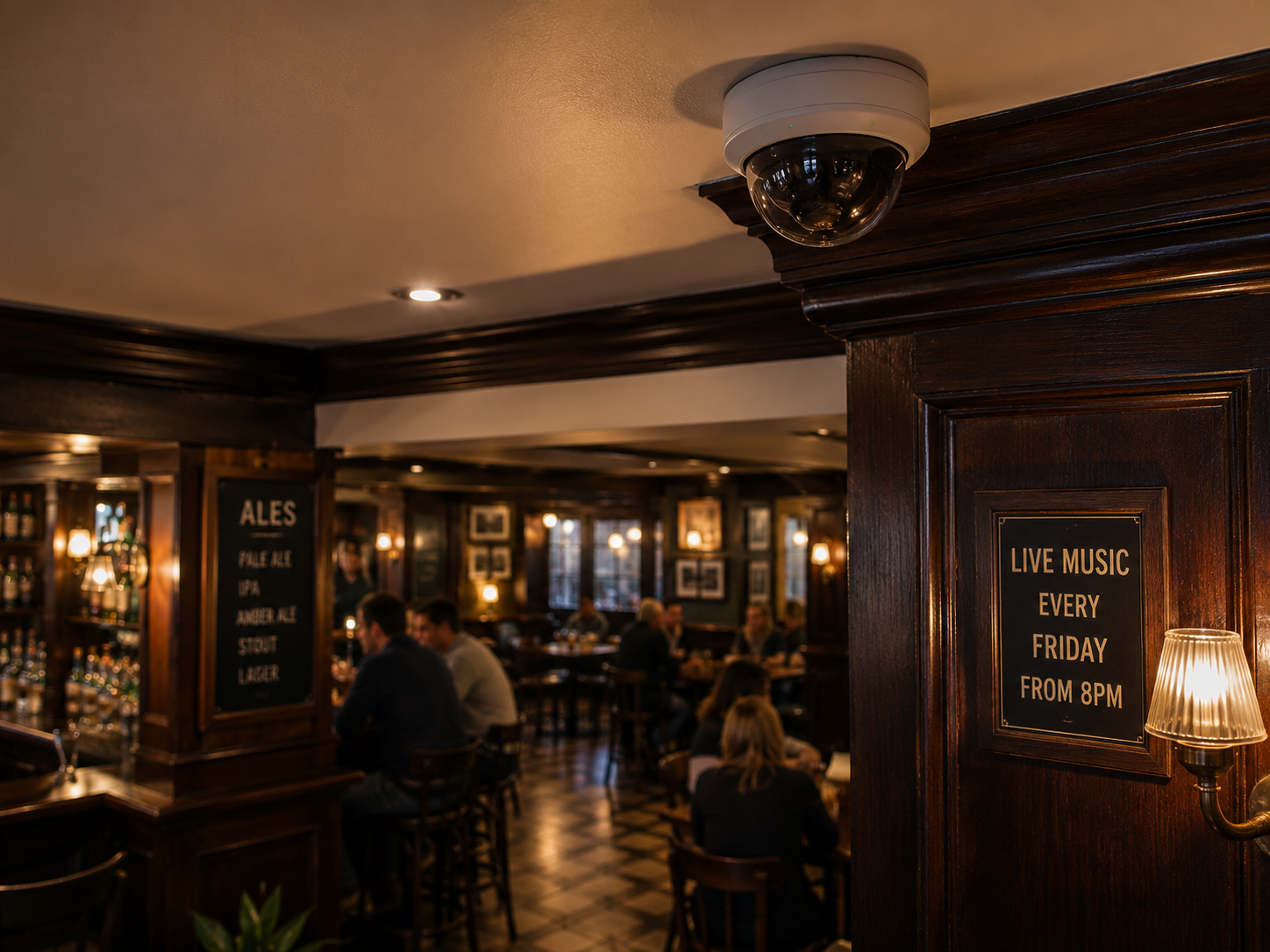
A CCTV camera in a smart pub
Guides

Hotel CCTV Design Guide

A well-designed CCTV system does far more than record incidents. It protects guests and staff, supports investigations, deters criminal activity and provides valuable operational insight into how a hotel functions. Yet one of the biggest misconceptions is that designing a CCTV system starts with choosing cameras. It doesn’t. Successful CCTV design starts by understanding the building, identifying the risks and deciding what information the system needs to capture. The cameras themselves are simply one part of the overall solution. Whether you’re planning CCTV for a new hotel, refurbishing an existing property or upgrading an ageing analogue system, this guide explains

Read More
Blog

Why Reliable Hotel Wi-Fi Now Drives Guest Reviews

By James Harrison Managing Director, Connected Hospitality For decades, the fundamentals of a great hotel experience were simple: a comfortable bed, good service, and a clean room. Today there is another factor that quietly determines whether a guest leaves a glowing five-star review or a frustrated complaint. That factor is Wi-Fi connectivity. In modern hospitality, reliable internet access has moved from a “nice-to-have” to a core component of the guest experience, and it is increasingly one of the biggest influences on online reviews and guest satisfaction scores. Hotels that underestimate this shift often discover that their reputation suffers for reasons

Read More
Blog

Designing Wi-Fi for High-Density Event Environments

Event venues face unique connectivity challenges. Unlike hotels or restaurants with predictable occupancy patterns, events create intense bandwidth demand within short timeframes. Conferences, exhibitions, concerts, and corporate gatherings often bring hundreds or thousands of connected devices into a single space. Attendees stream sessions, upload media, use event apps, and access cloud platforms simultaneously. Without proper planning, networks quickly become overloaded. High-density Wi-Fi design starts with strategic access point placement. Simply adding more hardware doesn’t solve congestion — careful signal planning prevents interference and ensures balanced coverage. Band steering, load balancing, and traffic shaping are essential to maintain performance during peak

Read More
Blog

Why Reliable Guest Wi-Fi Directly Impacts Revenue

Connectivity is no longer a luxury amenity — it’s an expectation. In many cases, it directly influences booking decisions, online reviews, and customer loyalty. Modern travellers often work remotely. Business guests attend virtual meetings from hotel rooms. Families stream entertainment in the evenings. Event attendees post in real time. If connectivity fails, frustration follows — and negative reviews often mention Wi-Fi performance. Reliable guest Wi-Fi supports more than browsing. It enables mobile check-ins, digital ordering systems, contactless payments, cloud-based property management systems, and smart room technologies. Poor connectivity doesn’t just affect guests; it disrupts internal operations too. From a revenue

Read More